
I suck at naming things - and so do AIs... then I came across an MFM podcast with David Placek, creator of names like BlackBerry, Vercel, CapCut etc. In the pod, he breaks down the anatomy of a good name and the process his team uses to find the right names.
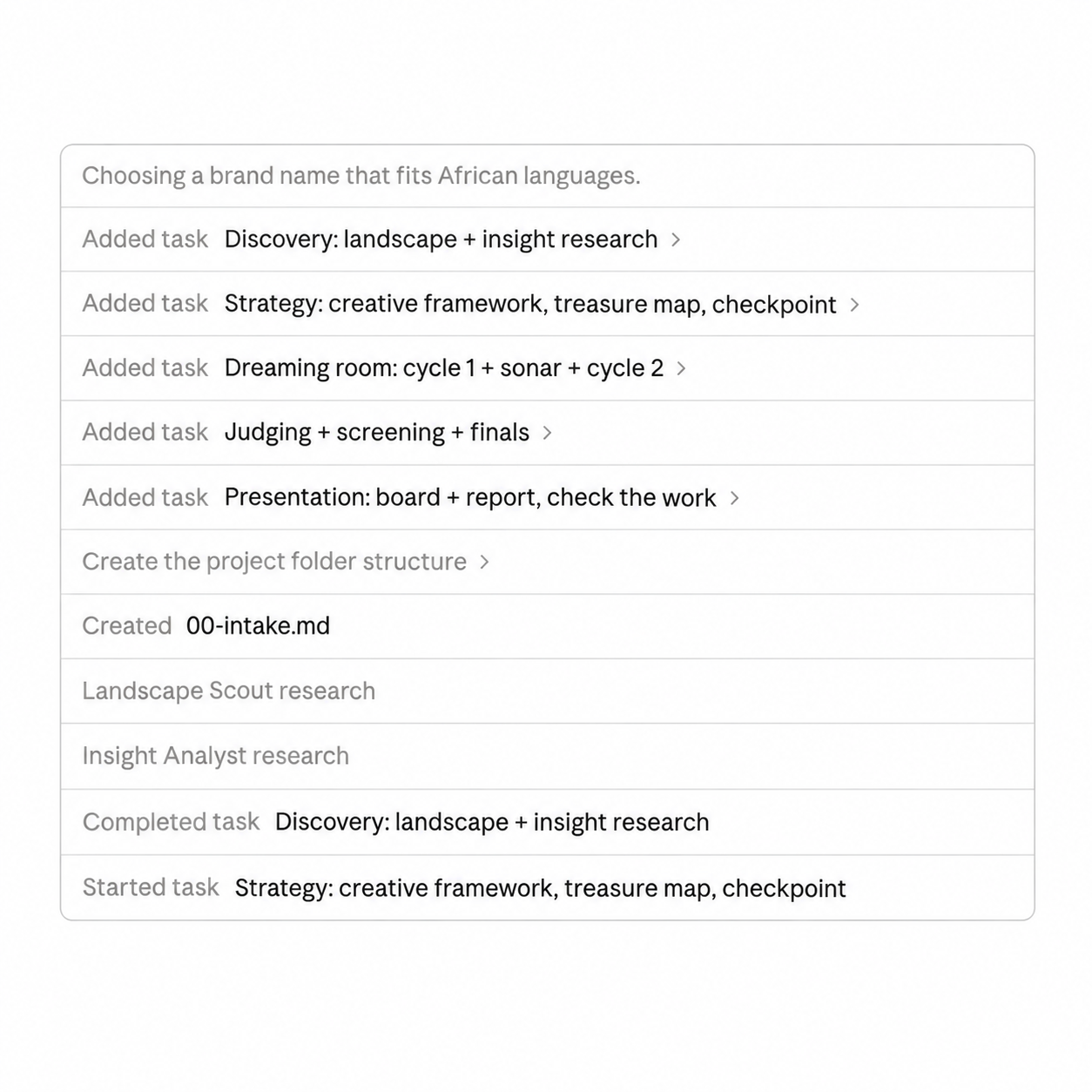
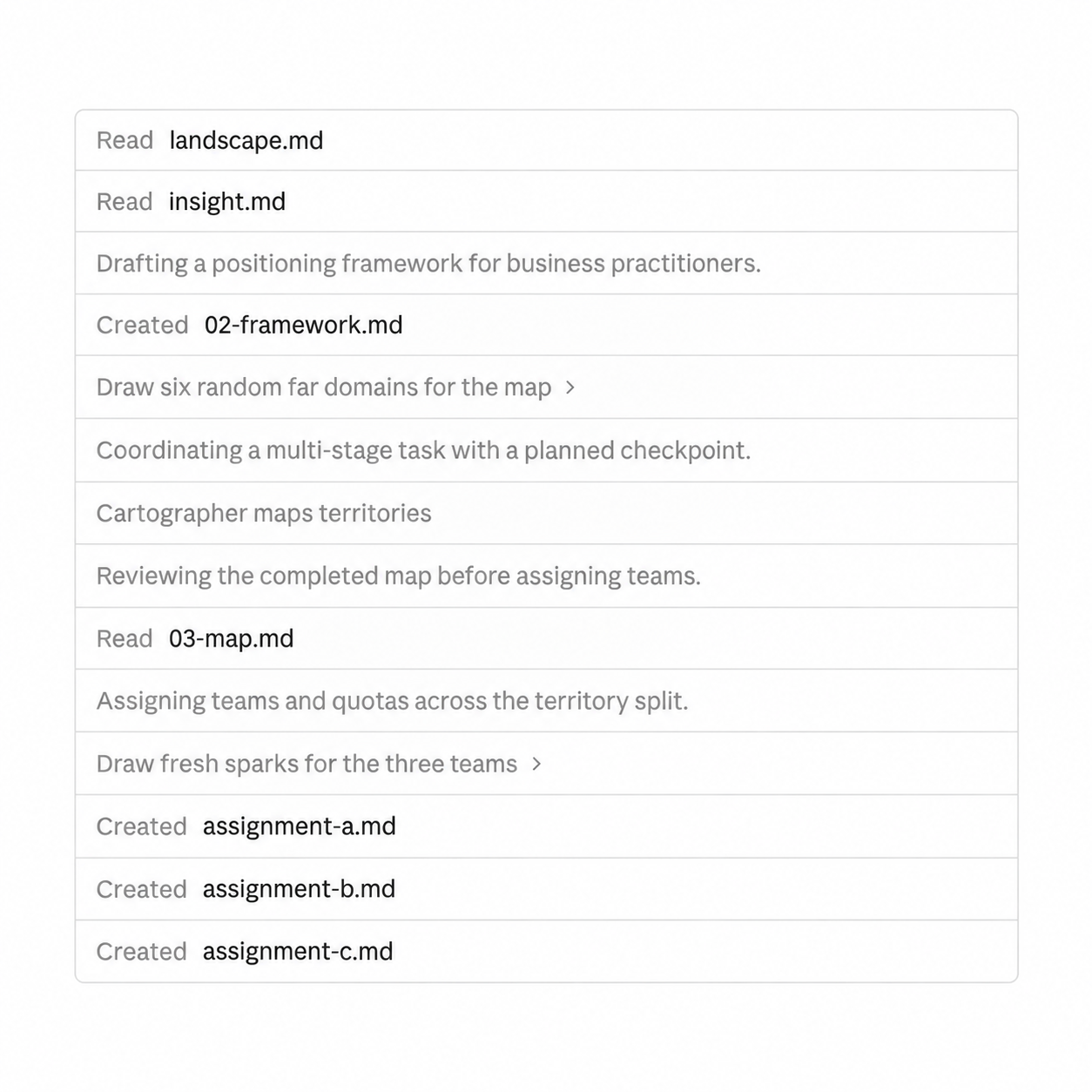
So I put the transcript into claude and invoked the skill creator to create a skill containing agents and subagents representing the structure Placek mentions about coming up with a good name.I asked claude with the skill to name a project for me, it asked me a few questions and then, it ran for 7+ hours and ended up with a great name I would never have thought of and the .com was available.I was happy.
Then I started thinking about what this actually meant, for Placek, for me, and for any business that has built its reputation on know-how.
Here is the gist of this process
Naming a company involves a rigorous, technical process to move from a commodity idea to an asymmetric advantage. David suggests the following systematic approach:The Strategic Foundation
- Define the Victory: Gather stakeholders to align on what winning looks like, the core problem solved, and the single most critical message to communicate (11:59–12:53).
- Avoid the Comfort Trap: Do not settle for safe or descriptive names (like "ProMop"). Instead, pursue original, surprising names that remain processing fluent for the human brain (8:34, 46:30).
The Execution Phase (The Treasure Hunt)
- Use Small, Focused Teams: Avoid large group brainstorming sessions, which trigger peer pressure and lead to generic choices. Instead, utilize two-person teams to maintain creative independence (18:15–19:20).
- Explore Diverse Categories: Map out potential names by looking for synchronicity—connecting your product to unrelated domains like Greek/Latin roots, mythology, the periodic table, or non-industry publications (17:50, 23:45, 36:31).
- Apply Linguistic Principles: Use "power letters" such as P, K, and B, which are scientifically associated with speed and reliability. Ensure the name fits the CVCV (consonant-vowel-consonant-vowel) structure for memorability (33:02, 33:40).
Evaluation & Validation
- Divergent/Convergent Cycles: Allow ideas to exist in a "trash" bucket initially without judgment, then move through cycles to refine them (17:14, 31:20).
- Proof of Concept: Don't present lists of names. Present them in real-world context (e.g., magazine headlines, advertisements). If it feels believable and creates high-frequency leverage, it is a winning candidate (45:02–45:57).
Full video: https://www.youtube.com/watch?v=fDIW4W24VNk Here is some of claude using the skill
Why this works today
What I did here, speaks to getting the most out of AI tools in general. Average questions get average answers. Getting the most out of LLMs requires domain expertise. Which is why developers will have an edge in creating good software with AI compared to non-developers. Same applies to musicians, designers, scientists etc.
Find the right terms pic.twitter.com/tIJc97XPW5
— Alex Sidorenko (@asidorenko_) August 1, 2026
Granted it won't be the same as working with the expert directly but let's say this improves my output quality by 20% than what it would have otherwise been, that's a win, for me.
I probably couldn't afford Placek even if I wanted to so it's not like he is losing anything, top companies will still pay his firm for best work, but it's a growing and concerning trend.
Experts are retreating, that's a problem
In the past you would happily give away some of your process because then people would realize how difficult it was and they'd hire you. Not so much any more if you give me the exact steps, armed with an LLM I can get a long way and much closer to what an expert would. Consider this chain of events...
Tyler here from @beehiiv laid out exactly everything that goes into making Beehiiv work, and Marc used that as a prompt to spin up a clone much closer to beehiv in no time - this would have been unthinkable just a year ago.
I vibe-coded beehiiv, and it's 83% cheaper.
— Marc Lou (@marclou) October 15, 2026
✨✨ Introducing https://t.co/Mme9luTckQ ✨✨
Everything you need to run a newsletter...
✍️ Editor
📅 Scheduling
📈 Stats
🌐 A website for every issue
🛡️ Deliverability guardrails
🔗 Send from your own domain (and keep your… https://t.co/4Ksny7HZnj
It's bigger than software
I think this is fine for software, most of SaaS has been overpriced and should have probably been open source to begin with... but, do this to other domains like biology, math, physics where collaboration. albeit gatekeeped, has gotten us much further than hoarding of information and findings.
We're already seeing this with scientists encouraging each other not to openly share their research because they will just get gobbled up by these AI companies and made proprietary. What do we do? For now I think we ride the wave, learn what we can, build useful tools with these technologies to help humanity and hopefully make some money along the way.
Share results, guard recipe
I don’t think the answer is for everyone to go dark. But until there’s a new deal, where AI companies pay for what they learn from and creators get to set the terms, every business has to decide what it can afford to give away. Piracy never killed Netflix, because paying became easier than stealing.
Knowledge needs the same.Until then, my advice: share your results, guard your recipe.Thanks for reading this far, here is the skill if you want to have a look and test it out - of course for best results it's always best to work with experts: https://github.com/alikibao/public-skills
I've written more about what these skills are and how you can use them in your business here: AI Skills - What are they and why should you learn about them.